Conclusiones clave:
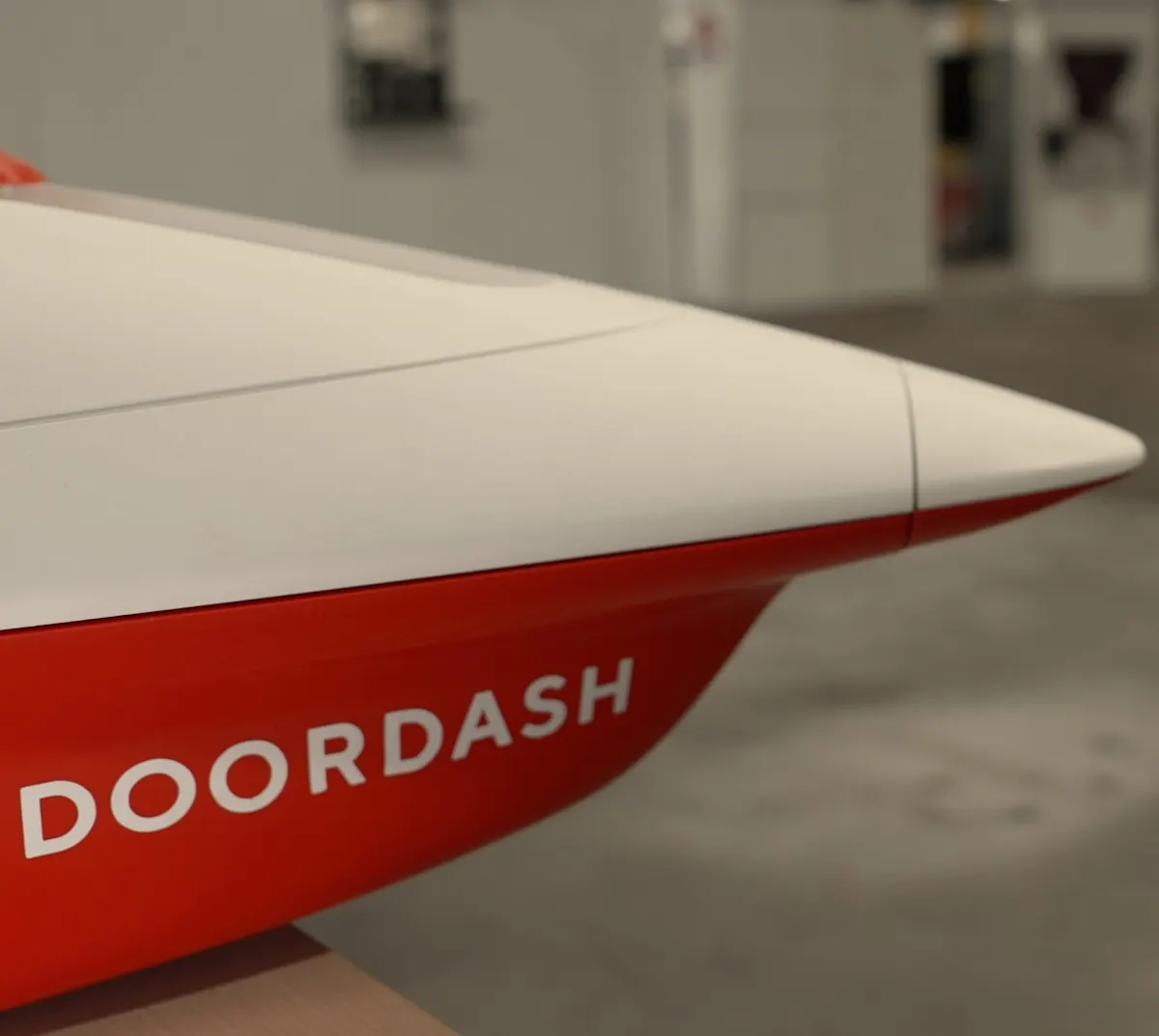
Ahora DoorDash es un transportista aéreo certificado con autorización de la FAA para operar comercialmente su propio servicio de entrega con dron, diseñado específicamente para el comercio local.
Los drones fueron desarrollados internamente en DoorDash Labs y operarán dentro de nuestra infraestructura existente del marketplace para permitir una entrega comercial escalable y sin problemas.
La entrega con dron nos ofrece una forma de atender a más clientes y resolver los problemas más difíciles de la entrega por tierra para los negocios locales.
Hoy, DoorDash anunció que obtuvo la certificación de transportista aéreo de la Parte 135 de la Administración Federal de Aviación (FAA) y lanza DoorDash Air, nuestro programa interno de drones. Esta certificación significa que DoorDash está autorizado para operar como transportista aéreo y ofrecer una experiencia de entrega con dron aún más integrada, lo que abre nuevas posibilidades para las empresas locales.
La certificación de la Parte 135 de la FAA es un hito regulatorio y técnico muy importante. El proceso es riguroso y los estándares son elevados: los operadores deben superar un rigoroso proceso de evaluación en cinco etapas que verifique la aeronavegabilidad de la aeronave, los programas de mantenimiento y los procedimientos de seguridad. El estándar de seguridad y fiabilidad operativa se encuentra en el nivel requerido para operar sobre las comunidades, y nos enorgullece convertirnos en el octavo operador de drones en obtener esta certificación. Agradecemos a la FAA por su participación durante todo este proceso.
“Queremos que la entrega por dron funcione para cualquier tienda, en cualquier lugar. Estamos construyendo todo para que eso sea posible, desde la infraestructura terrestre hasta el propio dron, y los sistemas de transferencia que hacen que funcionen juntos a la perfección“, dijo Harrison Shih, jefe de DoorDash Air. “Los avances en hardware, computación e IA están creando capacidades extraordinarias para el comercio local, y convertirnos en transportistas aéreos certificados acelera todo lo que estamos construyendo“.
Una nueva dimensión para la entrega local
Sabemos qué hace que las entregas funcionen a gran escala, tanto en tierra como en el aire, a partir de más de 10.000 millones de órdenes totales y decenas de miles de entregas con dron completadas hasta la fecha.
Los negocios locales en DoorDash están aumentando el volumen y la variedad de lo que ofrecen, y estamos poniendo más tecnología en manos de cada tienda como parte de nuestra misión. La entrega por dron permite a los consumidores tener lo que necesitan cuando más lo necesitan, ya sean artículos esenciales como la medicina para el resfriado o artículos urgentes como un café o una comida caliente para una enfermera que termina un turno de 12 horas. En 2025, los drones realizaron entregas en un promedio de tan solo 25 minutos según nuestras últimas estimaciones. De hecho, algunas de las ubicaciones que participaron en nuestras pruebas piloto de drones vieron crecer el volumen de órdenes de DoorDash aproximadamente un 30 %, y ese aumento se mantuvo durante las nueve semanas posteriores al lanzamiento del piloto.
La entrega con dron también resuelve desafíos únicos para el comercio local. Por ejemplo, más del 20 % de las órdenes en la plataforma de DoorDash en 2025 viajaron entre tres y cinco millas, pero tardaron un promedio de casi un 25 % más que las entregas más cortas, principalmente porque encontrar al Dasher adecuado lleva más tiempo para viajes de distancia media. Al asignar las entregas de media distancia a los drones, los Dashers pueden centrarse en las órdenes que suelen preferir: entregas más cortas que pueden completar rápidamente mientras permanecen cerca de una alta concentración de comercios, lo que optimiza sus recorridos y maximiza su potencial de ganancias al permitirles aceptar su siguiente orden más rápido.
Lo que estamos construyendo
Tal como a nuestro robot terrestre, Dot, estamos diseñando y construyendo nuestro programa de drones dentro de DoorDash Labs, nuestro equipo interno de robótica y autonomía. Estamos diseñando una aeronave específicamente pensada para cubrir las necesidades que detectamos en el comercio local y que complementa los diseños de corto y largo alcance que nuestros socios están implementando a gran escala. También nos enorgullece el hecho de que nuestro dron está diseñado y construido en Estados Unidos, y la mayoría de los componentes son fabricadas aquí mismo en EE. UU.
La aeronave es lo que todos ven. El problema más difícil es la infraestructura y la integración en tierra: conciliación de inventario en tiempo real, sistemas universales de transferencia para autoservicio, azoteas o las puertas traseras de las tiendas. Esa infraestructura es lo que hace que la entrega por dron funcione realmente a gran escala para las tiendas. Estamos construyendo el sistema completo de extremo a extremo, no solo la aeronave. Resolver problemas físicos difíciles para los negocios locales es nuestra prioridad.
DoorDash Air funciona sobre la red de DoorDash, una de las mayores redes de comercio local del mundo. Esa escala es lo que lo hace útil para las tiendas: un negocio local ya llega a los clientes que ordenan cenas, comestibles o cargadores de teléfono a través de esa red, sin construir ninguna de las infraestructuras que la respaldan. A medida que la red sigue creciendo, esperamos que la entrega por dron escale junto con ella, dando a más tiendas una forma más rápida de llegar a los clientes que ya están realizando órdenes.
Una sola red, todos los modos de entrega
Los drones son una parte de un conjunto creciente de opciones de entrega que estamos escalando para las tiendas, junto a los Dashers, Dot y nuestros socios autónomos de entrega. Los Dashers siguen siendo esenciales para la red, ya que gestionan la gran mayoría de nuestros millones de entregas diarias, incluidas las órdenes que los sistemas autónomos no pueden realizar, como acceder a edificios de departamentos o entregar órdenes de gran volumen.
Ya construimos el nivel que maneja el reto de la coordinación: nuestra Plataforma de entrega autónoma empareja cada orden con el método más efectivo en tiempo real, de modo que una pizzería de barrio se conecta a la misma red que una cadena nacional. A medida que aumenta la demanda de entrega local, trabajamos con los principales proveedores de tecnología autónoma mientras construimos la infraestructura (incluidas las herramientas de IA como SmartScale para tiendas) para que cualquier socio pueda integrarse con nosotros mientras nos expandimos a las entregas aéreas.
Qué sigue
Obtener la certificación de la Parte 135 y lanzar nuestro programa de drones de primera mano es un paso importante que lleva años en marcha, pero es solo el comienzo. Para nosotros no se trata solo de construir el dron, sino de gestionar la aerolínea: la ruta, los sistemas de seguridad, el nivel operativo que hace que todo funcione sin problemas.
Más adelante este año compartiremos más información sobre la aeronave y sobre cómo nuestro programa de drones se integra a la red más amplia, junto con los Dashers, Dot y nuestros socios.
DoorDash Labs está contratando en robótica, autonomía, hardware y operaciones. Construye con nosotros.
Declaraciones prospectivas
Este comunicado contiene declaraciones prospectivas dentro del significado de la Sección 27A de la Ley de Valores de 1933, y sus modificaciones, y la Sección 21E de la Ley de Intercambio de Valores de 1934, y sus modificaciones. Las declaraciones prospectivas generalmente se refieren a eventos futuros, y tales declaraciones en esta comunicación incluyen, entre otras, la estrategia de DoorDash con respecto a la entrega multimodal y las expectativas sobre la disponibilidad, el rendimiento, los resultados y los beneficios de la entrega por dron. Es posible que las expectativas y creencias con respecto a estos asuntos no se materialicen, y los resultados reales en períodos futuros están sujetos a riesgos e incertidumbres que podrían hacer que los resultados reales difieran materialmente de los proyectados. Para obtener información sobre los posibles riesgos e incertidumbres que podrían causar diferencias entre los resultados reales y los resultados previstos, consulta los informes anuales más recientes en el Formulario 10-K y los informes trimestrales en el Formulario 10-Q de DoorDash, presentados ante la Comisión de Bolsa y Valores.


