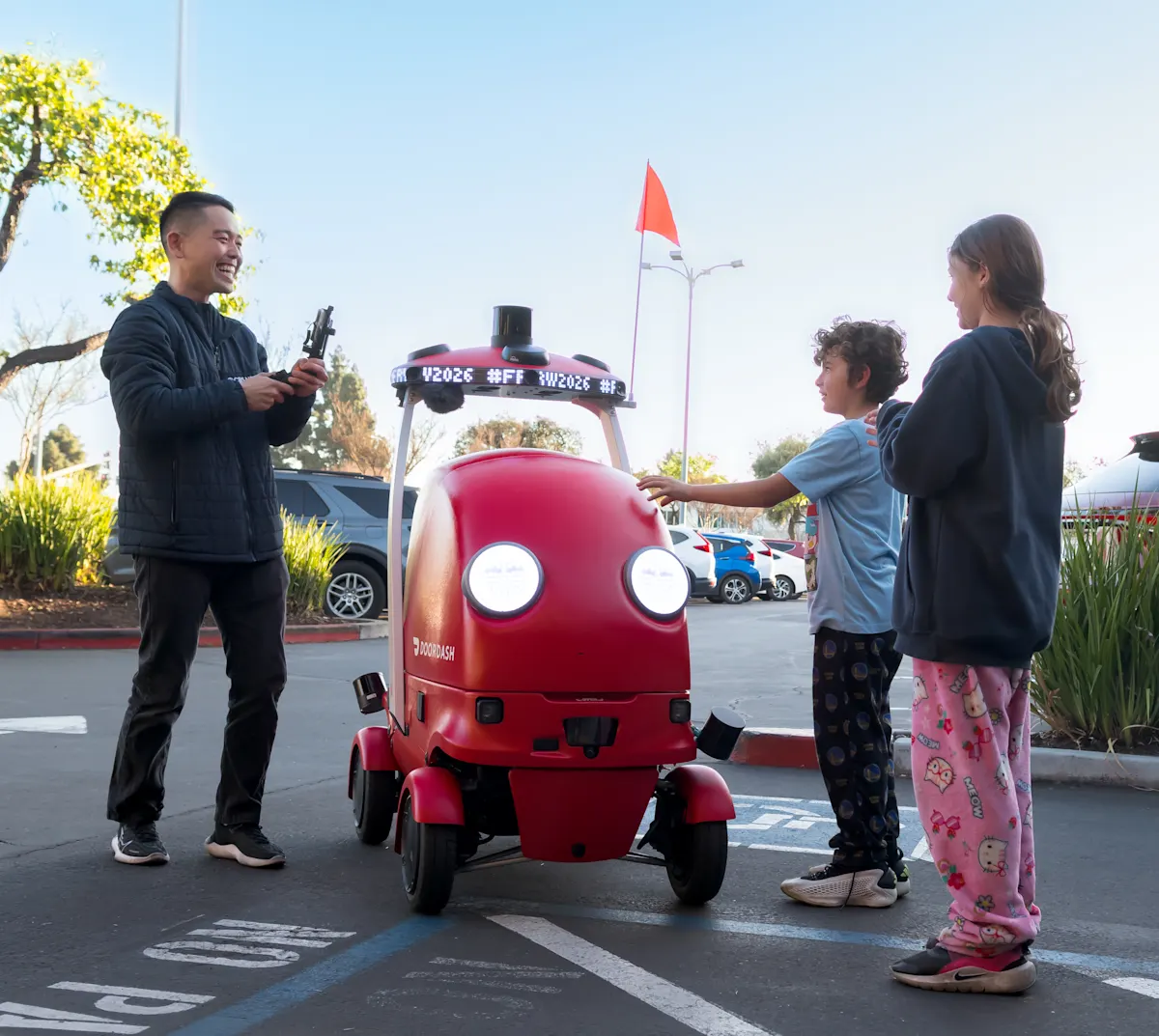
MESA, AZ — DoorDash hosted a community listening session at Mesa K–8 STEM Academy yesterday to gather input from educators, students, school leaders, and community partners on the future of robotics education and the role real-world autonomous technology can play in the classroom.
The session, titled “Exploring Robotics Education & the Future of Work with DoorDash Dot & Sphero,” brought together robotics club advisors, Science, Technology, Engineering, and Mathematics (STEM) and Career Technical Education (CTE) educators, school district administrators, student representatives, and leaders from DoorDash Labs and robotics education partner Sphero. The discussion centered on unmet needs in robotics education, barriers to access, and how hands-on learning with approachable autonomous technology – like DoorDash Dot, the company’s autonomous delivery robot – can deepen student engagement and understanding.
“This session was intentionally designed to listen first,” said Sueli Shaw, Head of Social Impact at DoorDash. “Educators and students are closest to the classroom experience, and their insights are critical to building a program that is realistic, equitable, and genuinely valuable.”
During the session, participants engaged in small-group discussions and interactive demonstrations, including live showcases of DoorDash Dot and Sphero robotics tools. Students were invited to share what excites them about robotics, what makes learning challenging, and what kinds of real-world robot activities feel most meaningful. Educators and administrators offered perspective on curriculum alignment, resource needs, and pathways that connect robotics learning to future careers.
“One of the biggest gaps we face in STEM education is helping students connect what they’re learning to real-world technology,” said Jaclyn Bycott, Principal, K-8 STEM Academy at Red Mountain Ranch. “DoorDash Dot gives students a tangible example of how robotics, coding, and problem-solving come together outside the classroom. The opportunity to use something like Dot in our program could make those concepts click in a way textbooks and simulations alone can’t.”
Insights from the Mesa session will directly inform the design of a pilot K–12 Dot Robotics Education Program planned for 2026. The future program is expected to include hands-on learning modules, student design challenges, live or virtual Dot demonstrations, and career exploration content developed in partnership with Sphero and informed by DoorDash Labs engineers.


