
In January 2024, the City of Seattle implemented an unprecedented policy that completely upended the way dashing works, making it harder for a Dasher to flexibly earn on their own time. This law requires Dashers to be paid nearly $30 an hour, before tips, plus additional pay for mileage – far exceeding Seattle’s minimum wage of $21.30, which is already one of the highest in the country.
Two years later, it’s clear the policy has produced the opposite of what it promised. Dasher earnings are down overall, restaurants have had a massive drop off in orders, and consumers are paying the highest fees in the U.S.
Lost Orders and Less Revenue for Seattle Businesses
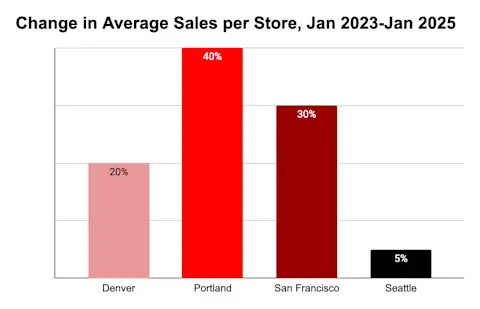
Seattle’s delivery pay law is hurting restaurants and local businesses. They’re struggling with fewer orders and less revenue. From January 2023 to January 2025, the monthly average sales per store on DoorDash grew only about 5% in Seattle, whereas sales increased by over 20%, 40%, and 30% in Denver, Portland, and San Francisco respectively. Seattle continues to be the most expensive market to facilitate delivery in the United States.
A new study released by the Seattle Times last week found that just 12% of Seattle businesses are earning enough to cover their expenses, with more than 67% reporting that they’re under more financial stress now than in 2020 and 2021.
Seattle Dashers are Earning Less, Not More
While it is true some Dashers are earning more for individual deliveries, Seattle Dashers on average earned more than 20% less per hour spent on the app in 2024 than they did in 2023. That downward trend persisted into the first three quarters of 2025 as earnings per total time spent on the DoorDash app was nearly 25% lower than 2023.
A new study completed by the National Bureau of Economic Research in December confirmed that highly active workers completed fewer deliveries per month, which, in combination with the lower tips, completely offset the higher base pay.
Wait times for Dashers between orders have also gotten progressively longer since the implementation of the earnings standard in Seattle. In fact, the average wait time between offers in September 2025, was nearly FIVE times higher than it was in September 2023, before the standard went into effect. Dashers were forced to wait an average of about 20 minutes between each offer.
Seattle Consumers Pay Highest Fees in the U.S.
Seattle consumers are feeling the pinch from this policy too. Average fees in Seattle are the highest in the country as a result of regulations that have vastly increased the cost of facilitating delivery. In the third quarter of 2025, the average fee per order paid by Seattle consumers on DoorDash Marketplace was over 3.5 times the average fee per order paid by consumers across Denver, San Francisco, and Portland.
The Bottom Line
The numbers speak for themselves – two years of factual data proves this failed policy is hurting the people it was designed to help. Dashers earn less and wait longer. Restaurants have lost orders. Consumers are paying more.
Seattle Mayor Wilson and members of the city council should come to the table to make things right for their constituents – despite what independent worker groups might say. The inauguration of these new leaders is an opportunity to reassess this harmful policy, and DoorDash is ready and willing to find a compromise that puts Dashers, merchants and customers first. We’re committed to empowering local commerce, restoring access to crucial delivery services, and helping Dashers continue to earn on their own schedules in Seattle.


